
Sex Work w/ Caty Simon and Maryse
First Aired: 12-06-2006 -- 8 comments | Add comment
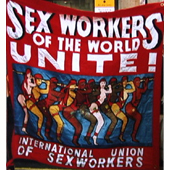
Sex workers Caty Simon and Maryse discuss social standards of normal and acceptable sexuality and how it affects mental wellbeing, from the point of view of sex workers rights.
Podcast: Play in new window | Download (Duration: 52:55 — 48.5MB)
Subscribe: RSS

















 Creative Commons 2.5 copyright
Will–when was the last time you believe something on tv, “reality” or otherwise? I find your comment about seeing the egalitarian transactions among women and purchasers in the legal brothels on TV to be really egregious. Surely you know that everything on tv is selected, with bits and pieces chopped here and there.
Even if the transactions at this particular place are more equal than most, you’re looking at a more privileged sector, not the majority of women (and men and all people) in the industry.
As for decriminalization, it is true that more abuse may be reported under a decrim/legalized model. But I don’t believe any group of women should be set aside for the purposes of sexual (ab)use, so that other women can be raped less. Indeed, many of the buyers say if they did not visit a sex worker, they would rape a woman. And in the case of Sweden, where they actually have lowered rates of trafficking and prostitution, more women are being raped in the general population. But, as I said, no women should have to take the burden of enduring all of men’s sexual proclivities just because they throw money at you.
I would encourage folks to check out YouTube videos here for more critiques of the industry: http://www.youtube.com/user/starvingflam…
Also, Rebecca Mott talks about surviving the sex trade at: rmott52.blogspot.com
I should also say I am absolutely for every single person in the sex trade to be decriminalized and not be punished in any way. The buyers, whether men or women should face consequences.
These are good points and I think the show lacks presenting the point of view of women who are abused by the sex industry. Decriminalization is not a simple solution but criminalization makes it very hard to protect rights as women have no recourse to calling the police when they face violence, and an industry that is underground is hard to keep underage women out, etc. I’ve talked to Caty about the legal brothels, which she does not support because the owners, not the workers, have control and benefit mostly financially. My understanding of Sweden is that they decriminalized being a prostitute but criminalized hiring prostitutes, which sounds like a much better direction than prosecuting the women.
I’ve had several friends who were in the sex industry, either in porn, dancing, or being escorts. All of them had middle or upper class backgrounds, and it is a mixed bag, with some of them ok with their experience and others feeling it was a mistake, part of that coming from the stigma around it.
Thanks for the dialog ~~
I think its important to listen to the views of sex workers, but feel that its a shame it is only the well paid sex workers who have ‘chosen’ this work. There are many women who are vulnerable, homeless, paying for a drug addiction etc and by I dont think its uncool to acknowledge the existence of abuse within the industry.
Equally it would have been nice to have a discussion of structural factors that lead women to sex work such as gender inequality which cause greater female poverty and unemployment etc.
these are really good insights. i think the sex work issue gets too split between the idea that people do it as a choice and the idea that people do it driven by poverty and gender inequality. sex work for many people is utterly abusive and a reflection of powerlessness, sexism, and poverty. sometimes it’s a mix. one important consideration is that decriminalization could help promote the rights of sex workers, who don’t have rights when it is illegal (an illegal sex worker can’t turn to the police in cases of assault for example). caty and maryse are more along the lines of the pro-sex work feminist perspective, and are also economically privileged — a different perspective would have enriched the program. they do both also have class awareness of what you are raising, and awareness of the abusive side, though, and don’t just view things from a civil libertarian perspective.
This is Caty. I am indeed speaking from a privileged position, but here’s survival sex worker Emi Koyama on how End Demand hurts less privileged sex workers:
“The first obvious consequence of suppressing “the demand” is that women will have to compete for a smaller pool of johns, forcing them to do more for less money. The decline of the demand would give remaining johns greater bargaining power, because it would become easier for them to “take the business elsewhere” (i.e. go find another worker willing to do more for less) if their demands are not completely satisfied. For example, a woman who had always insisted on using a condom might be forced to engage in less safe practices simply to stay competitive.
“Second, an increased pressure on johns displaces prostitution onto less populated or traveled areas, where they are less likely to be reported to the authorities or caught in a sting. The same environment makes it more dangerous for the women, both because it would be less familiar to them, and also because nobody would be around when they call for help.
“And finally, the profile of a typical john would change as we make it riskier to buy sex, since not all potential johns respond to the increased risks equally. “End demand” approach would drive out those men who are relatively rational and sensitive to risks, while the reckless and/or impulsive types remain undeterred. These johns are precisely the ones likely to demand sex without condoms, haggle mercilessly over price or specific acts, or use threats or violence to get what they want.
“In short, “end demand” campaign is harmful to women because it diminishes their bargaining power, forcing them to do more for less money, with more dangerous johns, under less safe environment. We cannot criminalize our way out of the current situation; we must address this social and economic concerns with solutions that achieve social and economic justice. We can begin by funding affordable housing, childcare, treatment programs on-demand (instead of many months’ wait list), and education and job training programs, instead of more jail beds or police cars.”
Here’s research from Norway on how the Swedish model increases violence against sex workers: http://humboldt1982.files.wordpress.com/2012/12/dangerous-liaisons.pdf
The Global Commission on HIV and the Law recently released a report that makes clear that the Sweden model does little or nothing to improve the lives of sex workers, as criminalizing clients still results in the trade being driven underground where women are more vulnerable to abuse and exploitation: http://www.hivlawcommission.org/resources/report/FinalReport-Risks,Rights&Health-EN.pdf
Pye Jakkobsson of the sex worker run Rose Alliance on the horrible labor conditions sex workers in Sweden face with their clients criminalized: http://www.youtube.com/watch?v=7D7nOh57-I8
A description of the violation Nordic sex workers routinely experience when police investigate them to gather evidence against their clients: http://glasgowsexworker.wordpress.com/2012/11/27/our-bodies-our-selves/
More resources:
http://feministire.wordpress.com/2012/11/23/taking-ideology-to-the-streets-sex-work-and-how-to-make-bad-things-worse/
http://www.lauraagustin.com/behind-the-happy-face-of-the-swedish-anti-prostitution-law
Complete pro prostitution propaganda. So depressing to see this as part of the Madness Radio’s catalogue. I’m beyond disappointed to discover these broadcasts.
The level of dishonesty and cognitive dissonance at play is shocking. Ugh.
Caty and Maryse definitely have their bias – I think I could do a better job providing a contrasting viewpoint as interviewer, but in general I don’t challenge guests but give them a platform to present their views, which I invite on the show because they come from outside the mainstream assumptions. Caty was one of the main organizers of Freedom Center for a long time; organizing around poverty and crime was an important focus of her role, and she was the main liaison for coalitions we organized with Arise for Social Justice and the Statewide Harm Reduction Coalition. Harm reduction principles informed all the organizing of Freedom Center around substance use, self harm, sex work, and altered emotional states. I hope the rest of the shows can make up for sometimes having shows that listeners don’t like or disagree with.